How to narrow debugging hypotheses faster with AI
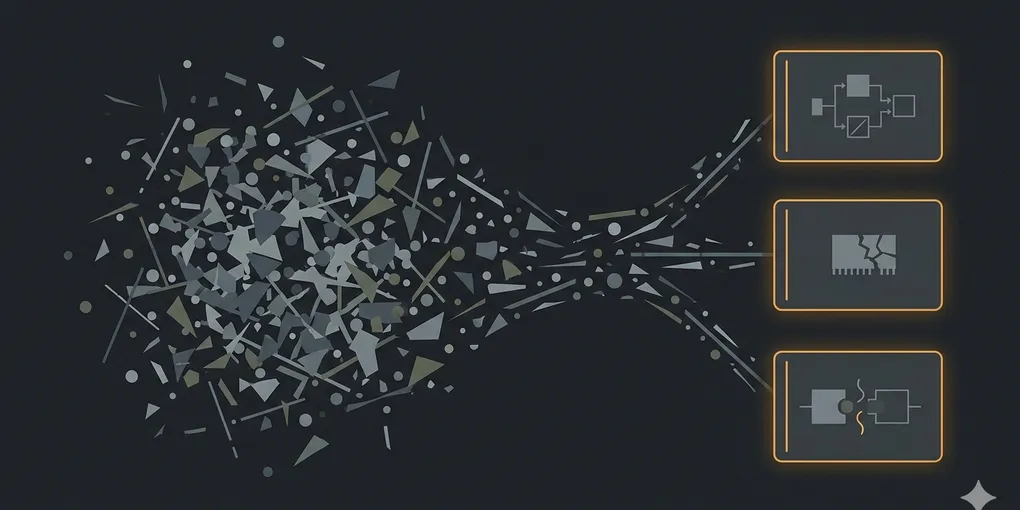
The expensive part of debugging is rarely typing. It is wandering too long inside a wide hypothesis space. Once five or six possible causes are floating around, most teams stop debugging and start poking at the system blindly.
AI is useful here when it reduces that search space. It becomes dangerous when developers let it announce a root cause with more confidence than the evidence supports.
The practical goal is smaller than “solve the bug.” The real goal is to move from one messy symptom to a short list of testable explanations.
1. Start from the symptom, not from your favorite theory
Most debugging waste starts when the team locks onto a cause too early. A stack trace, timeout, incorrect payload, or stale UI state should be treated as a symptom first.
A useful first prompt is narrow:
Here is the exact symptom, recent code change, and observed environment. List 3 to 5 plausible causes only. Do not rank them by confidence unless the evidence supports it.
That framing prevents AI from jumping straight into one story and forces it to stay in hypothesis mode.
2. Ask for cause buckets, not one answer
When the bug is still unclear, you want categories before conclusions. That usually means grouping possible causes into buckets such as:
- input or data shape mismatch
- state transition or ordering issue
- environment or configuration drift
- network, timeout, or async boundary issue
- recent refactor side effect
That one shift changes the debugging posture. Instead of asking “what is broken?” you start asking “which class of failure is this most likely to belong to?”
3. Force every hypothesis to carry one verification step
A hypothesis without a test step is just a guess with extra words. The fastest way to cut weak ideas is to require one concrete verification for each candidate.
For example:
- Hypothesis: cache invalidation is stale
- Verification: bypass cache and compare response headers
- Hypothesis: client and server disagree on payload shape
- Verification: log the serialized payload at both boundaries
If a proposed cause cannot produce one realistic verification step, it is usually still too vague to keep.
4. Use AI to eliminate causes, not just generate them
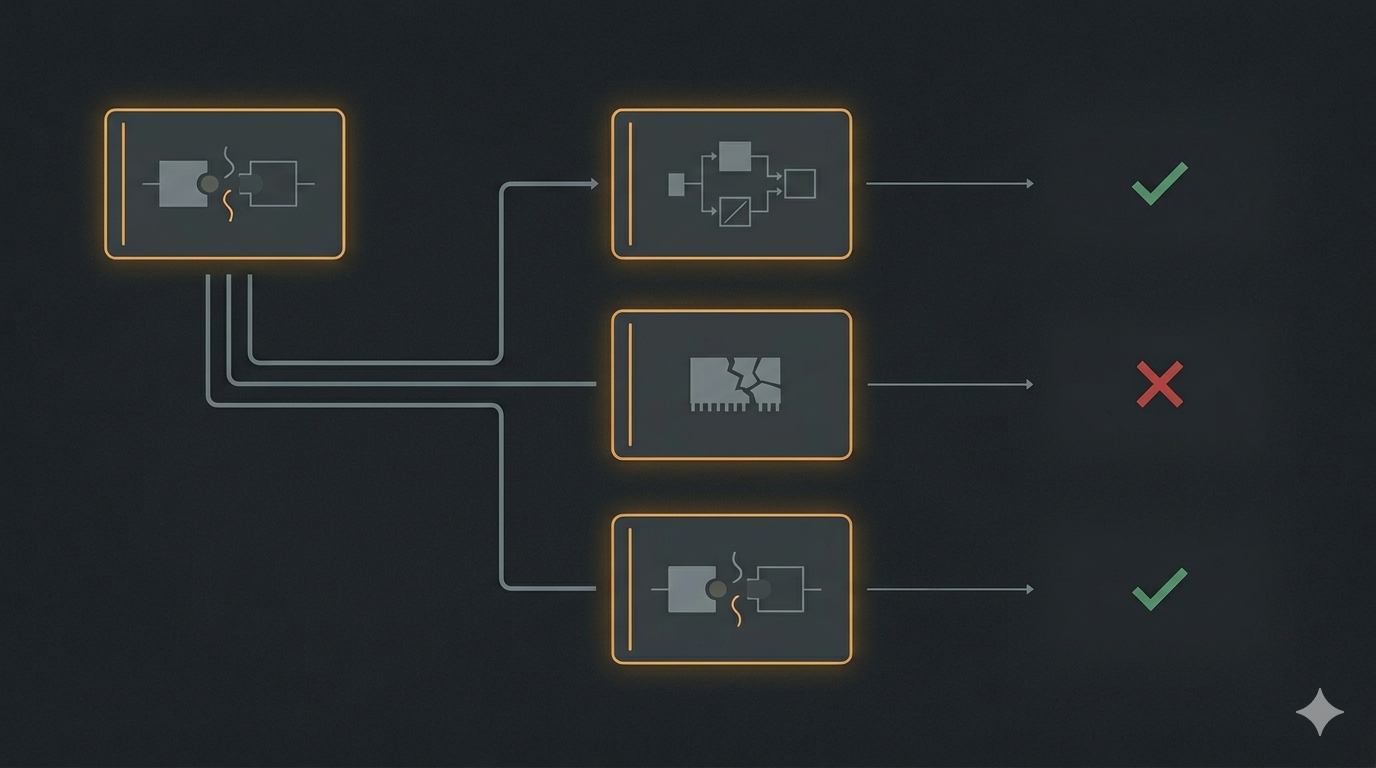
Generation is only half the value. The better use is elimination. After one or two checks, ask AI which hypotheses should now be removed and why.
Given these two observations, which of the earlier hypotheses should now be ruled out? Keep only the ones still consistent with the evidence.
This keeps the loop honest. The debugging session gets shorter because the candidate set gets smaller after every check.
5. Keep a fixed debug note template
The best teams make debugging visible. A small note template is enough:
- symptom
- recent change
- current environment
- top 3 hypotheses
- next verification step for each
- ruled-out causes
Once the note is structured like this, AI becomes more useful because it has fewer places to hallucinate context.
What to do first
Take one active bug and write down the symptom in one sentence, then ask AI for only three cause candidates and one verification step for each. If the candidate set is not smaller after that, the prompt was too wide.